




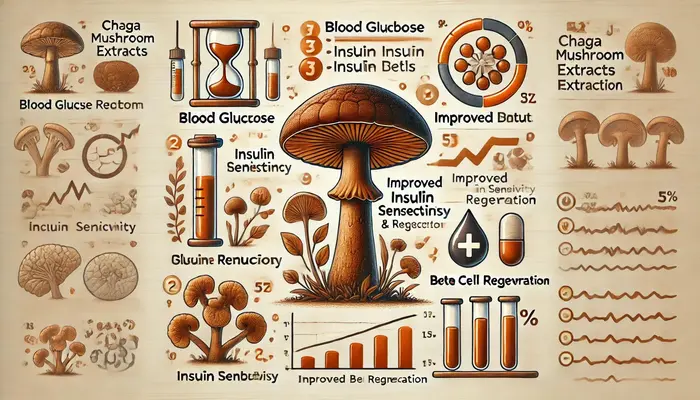
Chaga mushroom (Inonotus obliquus) polysaccharides have demonstrated hypoglycemic effects in diabetic animal models by stimulating insulin secretion from pancreatic beta cells and improving glucose transporter expression.
Chaga extracts lower blood glucose in diabetic animal models through several mechanisms at once: inhibiting the alpha-glucosidase enzyme that breaks carbohydrates into absorbable sugar, improving cellular insulin sensitivity, and protecting or regenerating insulin-producing pancreatic beta cells. Human clinical trial data remains limited, so this evidence should be read as promising preclinical support rather than a substitute for prescribed diabetes treatment.
Benefits at a Glance
- Lowering blood sugar: Chaga extracts have a hypoglycemic effect, helping to control glucose levels after meals.
- Improving insulin sensitivity: Chaga can reduce the insulin resistance characteristic of T2DM and thus improve glucose uptake by tissues.
- Restoration of beta cells: substances from Chaga are able to stimulate the regeneration and proliferation of beta cells of the pancreas, which are responsible for the production of insulin.
- Relieving diabetes complications: studies show that Chaga can reduce damage to the pancreas and kidneys associated with diabetes.
- Complementary, not standalone: Chaga works best as an additional means of supporting glucose control and pancreatic health alongside, not instead of, prescribed diabetes treatment.
Chaga Mushroom and Blood Sugar Regulation: The Research Behind the Claims
Inonotus obliquus, widely known as Chaga, has been used in traditional Siberian and Eastern European medicine for centuries. In recent decades, scientific investigation has focused on its potential role in metabolic health, particularly glucose regulation and insulin function. While human clinical data remains limited, the body of animal and in vitro research is substantial enough to warrant serious attention from those exploring natural support strategies for type 2 diabetes and metabolic syndrome.Mechanisms Behind Chaga's Hypoglycemic Effects
Chaga contains a range of bioactive compounds including polysaccharides, triterpenoids, melanin, and betulinic acid. The hypoglycemic effects observed in animal studies appear to involve multiple mechanisms simultaneously. These include inhibition of alpha-glucosidase, an intestinal enzyme responsible for breaking down dietary carbohydrates into simple sugars, thereby slowing glucose absorption after meals. Chaga extracts have also demonstrated the ability to enhance insulin sensitivity at the cellular level, helping muscle and fat tissue respond more effectively to the insulin already present in the bloodstream. Some studies also point to improved expression of GLUT4, the glucose transporter responsible for moving sugar out of the bloodstream and into muscle and fat cells in response to insulin signaling — a separate mechanism from the pancreatic effects described below, which together may explain why chaga's glucose-lowering effect in animal models appears larger than any single mechanism alone would predict.Protection and Regeneration of Pancreatic Beta Cells
One of the most compelling areas of Chaga research involves its potential to protect and even support the regeneration of pancreatic beta cells — the specialized cells responsible for insulin production. In type 2 diabetes, beta cell mass and function gradually decline over time, worsening the disease's progression. Studies in diabetic animal models have shown that Chaga polysaccharides can reduce oxidative damage to the pancreas, limit beta cell apoptosis, and stimulate regeneration. If these effects translate to human physiology, Chaga could offer protection against the long-term decline in insulin secretory capacity that characterizes advanced type 2 diabetes. This distinguishes chaga from medications that only manage existing insulin output; the beta-cell protection angle, if it holds up in human research, would represent a genuinely different mechanism from most standard oral diabetes drugs.Antioxidant Activity and Diabetic Complications
Diabetes accelerates oxidative stress throughout the body, contributing to complications involving the kidneys, eyes, nerves, and blood vessels. Chaga is among the highest-ORAC-scoring natural substances ever tested — meaning its antioxidant capacity is exceptionally strong. By reducing systemic oxidative burden, Chaga may help protect the organs most vulnerable to diabetic damage, offering a complementary layer of support beyond direct glucose control. Its anti-inflammatory properties further contribute to this protective picture, as inflammation and oxidative stress are deeply interconnected in metabolic disease.How Strong Is the Evidence, Really?
Most of the research behind these claims comes from rodent models of diabetes, not human clinical trials. A frequently cited animal study found that chaga polysaccharide extract significantly reduced fasting blood glucose and improved glucose tolerance in diabetic mice over several weeks of dosing (Sun et al., J Ethnopharmacol. 2011. PMID: 21621599). Other in vitro work has confirmed alpha-glucosidase inhibition using isolated chaga compounds in lab conditions that mimic digestion. This is a genuinely promising evidence base, but it sits below the level of a completed human randomized controlled trial, and the doses used in animal studies don't translate directly to a human milligram-per-kilogram equivalent.The honest summary: chaga has a plausible, multi-mechanism case for supporting glucose metabolism, backed by consistent preclinical findings, but it has not been proven in human trials to treat or reverse type 2 diabetes. Anyone using chaga alongside a diabetes diagnosis should treat it as a complementary strategy under medical supervision, not a replacement for metformin, insulin, or other prescribed therapy.Chaga and Diabetes Medication: What to Watch For
Because chaga has its own blood-sugar-lowering activity, combining it with insulin or oral hypoglycemic drugs like metformin, glipizide, or glyburide raises a real risk of additive effects. Symptoms of blood sugar dropping too low include shakiness, sweating, confusion, and in severe cases, loss of consciousness. Anyone on glucose-lowering medication who wants to add chaga should do so under a doctor's guidance, with more frequent blood glucose checks in the first few weeks — particularly if a medication dose adjustment might be needed. This caution applies most strongly to insulin and sulfonylurea-class drugs, which carry the highest hypoglycemia risk on their own even before adding a supplement with independent glucose-lowering activity.How to Use Chaga for Metabolic Support
Chaga is most commonly consumed as a tea or decoction made from dried chunks, in capsule form with standardized extracts, or as an alcohol-based tincture. For metabolic applications, consistency matters — occasional use is unlikely to produce meaningful results. Choose products made from wild-harvested or carefully cultivated Chaga from clean environments, as this mushroom absorbs compounds from its host tree and surrounding environment. This absorptive tendency is also why sourcing region and testing transparency matter for a mushroom intended for regular, long-term metabolic use rather than occasional consumption. Pair Chaga supplementation with dietary adjustments and regular physical activity for the strongest effect on blood sugar and insulin sensitivity. None of these habits are optional add-ons — in the human studies that exist for other functional mushrooms and metabolic health, supplement effects consistently show up more clearly against a backdrop of reasonable diet and activity than in isolation.You can also buy them in our store.1. Chaga pieces
2. Chaga capsules
3. Chaga extract
Frequently Asked Questions
Can chaga replace my diabetes medication?
No. Chaga's glucose-lowering effects are documented mainly in animal and cell studies, not large human trials, and the research base isn't strong enough to justify replacing metformin, insulin, or other prescribed diabetes medication. It should be considered a complementary strategy discussed with your doctor, not a substitute for proven treatment.
How long before chaga affects blood sugar?
Animal studies showing measurable glucose improvements typically ran for several weeks of consistent daily dosing, not single doses. If you're monitoring blood sugar while adding chaga, expect any trend to show up gradually over 4–8 weeks rather than immediately, and track it with regular glucose checks rather than guessing.
What is Chaga?
Chaga is a functional mushroom used in traditional and modern wellness practices for its health-supporting properties, including a notably strong antioxidant profile and documented preclinical activity on glucose metabolism.
How do you use Chaga?
Chaga is commonly available as extracts, tinctures, capsules, or dried preparations for tea — the best form depends on your health goals and lifestyle. For metabolic support specifically, consistent daily use over weeks matters more than the exact format chosen.
Is Chaga safe for people with diabetes?
Generally yes at recommended doses, but anyone with diabetes should involve their doctor before starting, since chaga can add to the blood-sugar-lowering effect of insulin or oral diabetes medications and requires closer glucose monitoring during the adjustment period.
Related Articles
Sources
- Shashkina MY, et al. Chemical and medicobiological properties of Chaga. Pharm Chem J. 2006. PMID 17342320
- Glamoclija J, et al. Chemical characterization and biological activity of Chaga. Food Chem. 2015. PMID 25442609