




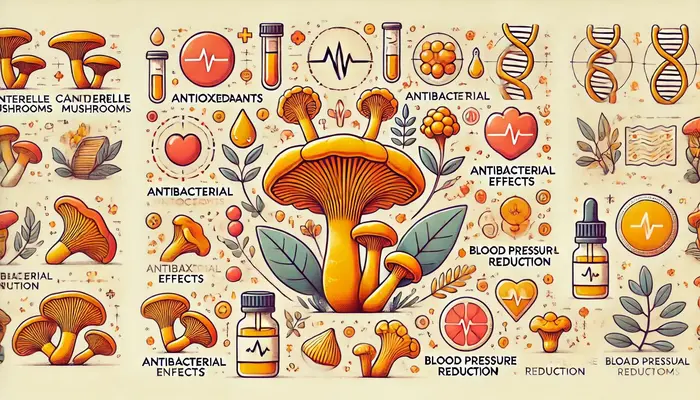
Chanterelle mushrooms (Cantharellus cibarius) are rich in beta-carotene, ergosterol, chitin, and polysaccharides with documented antioxidant, antimicrobial, and anti-inflammatory properties, making them valuable in both traditional cuisine and emerging functional food research.
Chanterelle mushrooms (Cantharellus cibarius) contain phenolic compounds, flavonoids, beta-carotene, and vitamin D that give them documented antioxidant, antimicrobial, and blood-pressure-supportive properties in laboratory research. Preclinical studies have found chanterelle extract shows selective cytotoxicity toward certain cancer cell lines while sparing healthy cells, and separately demonstrates ACE-inhibiting activity relevant to blood pressure regulation. These findings come primarily from cell-culture and animal research rather than large human trials, so chanterelle is best understood as a nutrient-dense, functionally interesting food rather than a proven medical treatment.
What Research Suggests Chanterelle May Help With
Several areas of preclinical research point to potential health-relevant activity in chanterelle extract, though it's worth stating clearly upfront that most of this evidence is early-stage and has not been confirmed in large human clinical trials.Cancer Cell Research
Laboratory studies have found that chanterelle mushroom extract demonstrates selective cytotoxicity against certain cancer cell lines in vitro, meaning it can kill specific cancer cells in a dish while leaving healthy cells comparatively undamaged. This is an interesting mechanistic finding common to many medicinal mushroom extracts, but it is far from equivalent to a proven cancer treatment; cell-culture selectivity does not reliably predict how a compound will behave in a living human body, and no human trials have established chanterelle as a cancer therapy.Blood Pressure Support
Chanterelle extract has shown the ability to inhibit angiotensin-converting enzyme (ACE) in laboratory studies, the same enzyme pathway targeted by common prescription blood pressure medications like captopril and enalapril. By inhibiting ACE activity, the mushroom's compounds may contribute to blood pressure regulation, which is a genuinely interesting parallel to established pharmacology, though it should not be interpreted as license to replace prescribed hypertension medication with mushroom extract.Antimicrobial Activity
Chanterelle demonstrates antibacterial properties in laboratory testing, notably against gram-positive bacteria such as Enterococcus faecalis, a pathogen implicated in urinary tract infections, endocarditis, and wound infections. Given the growing global concern around antibiotic resistance, natural antimicrobial compounds like those found in chanterelle are an active area of research interest, though again this remains preclinical rather than a validated treatment for active bacterial infection.Antioxidant Protection
Chanterelle's high antioxidant content helps protect cells from damage caused by free radicals, the reactive molecules implicated in oxidative stress. Oxidative stress is linked to the development of numerous chronic conditions, including cardiovascular disease, neurodegenerative disease, and certain cancers, which is why antioxidant-rich foods and extracts are broadly studied for their potential role in long-term disease prevention.The Active Compounds Behind These Properties
Chanterelle's functional properties come from several distinct compound classes working together. Phenols are the primary antioxidant compounds, neutralizing free radicals and protecting cells from oxidative damage. Flavonoids reinforce this antioxidant defense while contributing anti-inflammatory activity and supporting cardiovascular health by improving blood vessel condition. Ascorbic acid, better known as vitamin C, supports immune function and promotes collagen synthesis, which matters for skin, bone, and joint health. Beta-carotene and lycopene support eye and skin health, contribute additional antioxidant activity, and are linked to reduced risk of certain cancers in epidemiological research; beta-carotene specifically converts to vitamin A in the body, essential for vision and normal immune function. Together, this compound profile is why chanterelles routinely appear in discussions of functional, nutrient-dense whole foods rather than being valued for a single standout nutrient alone.How Chanterelle Compounds Compare to Pharmaceutical Approaches
It's worth noting one specific parallel: chanterelle's ACE-inhibiting activity operates through a mechanism similar to synthetic ACE-inhibitor medications used to treat hypertension. Synthetic ACE inhibitors are effective and well-established but can cause side effects in some patients, including a persistent dry cough and, less commonly, more serious reactions. Chanterelle's natural flavonoid and phenolic compounds work through related pathways and may act more gently on the body in preliminary research, though this has not been tested head-to-head against pharmaceutical ACE inhibitors in human trials, and no one should substitute chanterelle extract for prescribed blood pressure medication without medical guidance.Nutritional Profile
Beyond its studied bioactive compounds, chanterelle is a genuinely nutrient-dense food. It provides protein, B vitamins, and vitamin D, along with trace minerals including iron, zinc, and copper. This broader nutritional profile means regular culinary use of chanterelle contributes to overall immune function, metabolic health, and general wellbeing independent of any specific pharmacological claim, which is part of why it's worth valuing as both a food and a functional ingredient rather than treating the two as separate categories. A weekly rotation of chanterelle into meals can meaningfully add to overall micronutrient diversity without requiring any deliberate supplement strategy at all.Chanterelle vs. Other Medicinal Mushrooms
Chanterelle occupies an interesting middle ground compared to more intensively studied medicinal mushrooms like reishi, shiitake, or turkey tail. Those species have deeper human clinical trial histories, often including approved pharmaceutical adjunct uses in some countries. Chanterelle's evidence base is comparatively earlier-stage, concentrated more in cell-culture and animal research, and its primary cultural and commercial identity remains firmly culinary rather than medicinal. That doesn't diminish its research interest, but it does mean claims about chanterelle should be held to a slightly different standard: think of it as a nutrient-dense food with genuinely interesting bioactive compounds under investigation, rather than a mushroom with an established therapeutic track record like PSK from turkey tail or lentinan from shiitake.Vitamin D Content: An Underappreciated Benefit
Like several other mushrooms, chanterelles contain ergosterol, which converts to vitamin D2 when exposed to ultraviolet light, whether from sunlight during growth or through deliberate post-harvest UV treatment. This makes chanterelle a genuine, if modest, dietary source of vitamin D2, which is particularly relevant for people following plant-based diets who have fewer natural dietary sources of this vitamin compared to those who eat fatty fish or fortified dairy. Wild-foraged chanterelles that grew with natural sun exposure during development may carry meaningfully more vitamin D2 than those grown in fully enclosed cultivation without any UV exposure, an important nuance for anyone specifically seeking this nutrient from their mushroom choices.Safety Considerations
Chanterelle is widely consumed as a culinary mushroom and is generally well tolerated. As with any wild-foraged mushroom, correct species identification is essential, since several toxic species can superficially resemble chanterelles to an untrained eye; buying from a reputable cultivated or verified-wild source removes this risk. The false chanterelle (Hygrophoropsis aurantiaca) and, more seriously, certain Jack-o'-lantern mushroom species are among the lookalikes worth knowing before foraging chanterelles independently. Anyone taking blood pressure medication or blood thinners should be aware of chanterelle's ACE-inhibiting and other bioactive properties and mention regular high-intake use to their physician, since the combined effect with prescription medication has not been well studied. This is a reasonable precaution rather than a strong warning; occasional culinary consumption is unlikely to meaningfully affect medication, but anyone using concentrated chanterelle extract regularly and at higher doses should factor this into the conversation with their prescriber.Frequently Asked Questions
Can chanterelle mushrooms treat cancer?
No. Laboratory studies show selective cytotoxicity against certain cancer cells in cell-culture research, which is an interesting preliminary finding, not evidence of a cancer treatment. No human clinical trials have established chanterelle as an effective cancer therapy, and it should never replace conventional oncology care.
Can chanterelle replace my blood pressure medication?
No. While chanterelle extract shows ACE-inhibiting activity in laboratory research similar to a class of blood pressure drugs, this has not been validated in human trials at the scale needed to replace prescribed medication. Discuss any interest in complementary approaches with your prescribing physician rather than substituting on your own.
What is Chanterelle?
Chanterelle (Cantharellus cibarius) is a prized culinary mushroom studied for antioxidant, antimicrobial, and blood-pressure-relevant compounds, including phenols, flavonoids, and ACE-inhibiting substances, alongside a nutrient-dense profile of B vitamins, vitamin D, and trace minerals.
How do you use Chanterelle?
Chanterelle is most commonly used as a culinary mushroom in cooking, and is also available as extracts and capsules for those seeking a more concentrated, standardized dose of its bioactive compounds.
Is Chanterelle safe?
Chanterelle is generally considered safe for healthy adults as a food and at recommended supplement doses, but always consult a qualified healthcare professional before starting any new supplement, especially if you take blood pressure medication.
Shop Chanterelle
You can also buy chanterelle products in our store.1.Chanterelle fruits
2.Chanterelle capsules
Related Articles
Sources
- Wasser SP. Medicinal mushrooms as a source of antitumor and immunomodulating polysaccharides. Appl Microbiol Biotechnol. 2002. PMID 12242575
- Patel S, Goyal A. Recent developments in mushrooms as anti-cancer therapeutics. 3 Biotech. 2012. PMID 28324347