




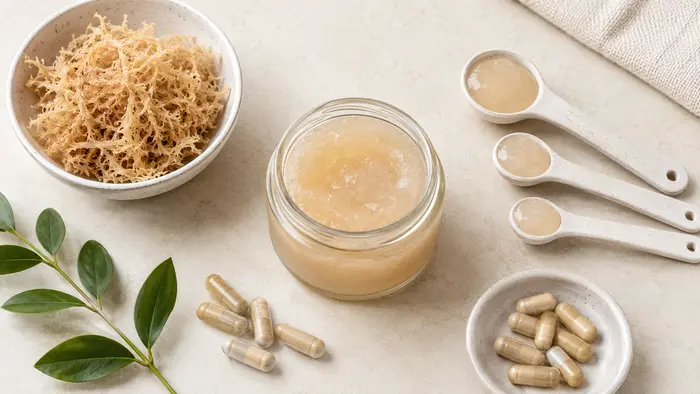
Most adults take 1-2 tablespoons of sea moss gel per day (roughly 4-8 g of dry equivalent), 1-2 teaspoons of powder, or 500-1,000 mg in capsule form. All three formats deliver the same core nutrients - the right choice depends on how you will fit it into your daily routine and how carefully you want to track your iodine intake.
What Is a Standard Sea Moss Dose?
Chondrus crispus - the red alga sold commercially as Irish moss or sea moss - provides roughly 47 mcg of iodine per gram of dried material, according to nutritional analyses of Atlantic-harvested specimens (Lomartire et al., Mar Drugs, 2021). With a standard daily dose of 4-8 g, that translates to 188-376 mcg of iodine - well within the WHO recommended intake of 150 mcg and below the tolerable upper limit of 1,100 mcg for healthy adults.
This range isn't arbitrary. It reflects the amount used in Caribbean and Irish folk traditions, where sea moss was consumed as a daily tonic, and aligns with the doses at which nutritional benefits appear without pushing iodine to excess. Most commercial products are calibrated to deliver roughly this amount per serving.
How Much Sea Moss Gel Should You Take Per Day?
Gel is the most popular way to take sea moss because it's easy to add to smoothies, oatmeal, soups, or coffee. One tablespoon of prepared gel weighs around 14-20 g, but its dry equivalent is only about 2-4 g, since most gel is 70-80% water. That means 1-2 tablespoons per day delivers a therapeutic dose without risking iodine overload.
Start with one tablespoon for the first week. This lets your gut adapt to the prebiotic fiber, which can cause temporary bloating if you introduce too much too quickly. After a week, most people tolerate two tablespoons without digestive discomfort.
How To Make Sea Moss Gel at Home
Soak 25-30 g of dried raw sea moss in cold filtered water for 12-24 hours. The moss will expand and soften. Drain, rinse well to remove residual salt or sand, then blend with 250-300 ml of fresh water until completely smooth. The gel stores in the refrigerator for 2-3 weeks. One batch lasts most people about two weeks at a standard daily dose.
How Much Sea Moss Powder Should You Take?
Powder is more concentrated than gel because all the water has been removed. One teaspoon of sea moss powder weighs roughly 3-5 g of actual dried seaweed, and 1-2 teaspoons per day is the standard recommendation. At two teaspoons, you're taking in approximately 6-10 g of dried sea moss - the upper end of the therapeutic range.
The key quality concern is iodine variability. A 2021 review found that iodine content in seaweed supplements can vary by 50-400% between batches depending on harvest location and season (Lomartire et al., 2021). If you're using powder, choose a brand that provides batch-specific iodine testing.
How Many Sea Moss Capsules Should You Take?
Capsules typically contain 500 mg of dried sea moss powder per capsule. The standard dosing recommendation is 1-2 capsules per day, providing 500-1,000 mg of sea moss. This is on the conservative end compared to gel and powder, but sufficient for most people's nutritional goals.
Capsules are the most practical option if you travel frequently, dislike the texture of sea moss gel, or want precise portion control. The limitation is that you're entirely dependent on the manufacturer's quality control. Always check that the supplement includes a certificate of analysis for iodine content and heavy metals.
Capsule Dose for Specific Goals
For general mineral supplementation and gut support, 500 mg daily is sufficient. For people primarily using sea moss for thyroid iodine support or skin hydration, some practitioners suggest 1,000 mg daily. Don't exceed 2,000 mg per day from capsules without professional guidance, as this approaches iodine levels where thyroid disruption becomes a realistic risk for sensitive individuals.
What About Raw Sea Moss - How Much Is Safe?
Raw dried sea moss - the whole dried fronds before any processing - is what you use to make gel at home. The dosing math is straightforward: 4-8 g of raw dried sea moss per day is the target range. This is equivalent to roughly 1 tablespoon of unprepared dried moss before soaking.
Raw sea moss typically retains a broader mineral profile than processed powder because no heat or solvent extraction has altered the natural compound balance. It's also the most cost-effective format. The trade-off is preparation time and the need to source quality raw material with known provenance.
Why Iodine Is the Key Safety Variable
Iodine is sea moss's most significant nutritional variable - and its most important safety consideration. The thyroid requires iodine to produce T3 and T4 hormones. The recommended daily intake is 150 mcg for adults and 220-290 mcg during pregnancy, according to the WHO. The US Institute of Medicine sets the tolerable upper limit at 1,100 mcg per day.
A 2019 review of seaweed-based iodine intake found that irregular consumption of high-iodine seaweed was associated with transient thyroid function changes in approximately 10-15% of participants with no prior thyroid history (Shannon and Abu-Ghannam, Phycologia, 2019). Stick to the recommended dose, don't stack multiple high-iodine foods on the same day, and consult a clinician if you have a thyroid condition before starting.
The concern isn't only the amount of iodine in sea moss - it's the interaction with other iodine sources in a modern Western diet. Someone eating iodine-fortified bread, drinking large amounts of dairy, and taking sea moss daily could reach over 1,000 mcg without realizing it. Tracking total dietary iodine for a week before starting sea moss is a genuinely practical step most guides skip.
Heavy Metal Testing: Why Sourcing Matters
Marine algae bioaccumulate heavy metals from surrounding water. Cadmium, lead, arsenic, and mercury have all been detected in commercial sea moss products, sometimes at levels exceeding European food safety thresholds. A 2021 systematic review found that 23% of tested seaweed supplement samples contained inorganic arsenic above the EU maximum limit for food supplements (Lomartire et al., 2021).
This isn't a reason to avoid sea moss - it's a reason to source it carefully. Wild-harvested sea moss from regulated Atlantic waters (certified organic from Ireland, Iceland, or the Azores) consistently shows lower heavy metal loads than farmed tropical varieties grown in unmonitored conditions. Ask for a certificate of analysis covering arsenic, lead, cadmium, and mercury. Any reputable supplier can provide one.
Who Should Use Caution With Sea Moss?
Sea moss is safe for most healthy adults at the recommended dosages. Several groups should take extra care or avoid it without professional guidance. People with thyroid conditions - including Hashimoto's thyroiditis, Graves' disease, or those taking levothyroxine - are most at risk from iodine variation. Even modest changes in iodine intake can shift thyroid hormone levels meaningfully in these individuals.
Pregnant and breastfeeding women have higher iodine requirements (220-290 mcg/day) but also a narrower safe window. The safest approach is ensuring total iodine intake stays between 220 mcg and 500 mcg per day - counting all dietary iodine sources, not just supplements. People taking blood thinners should flag sea moss use to a pharmacist, as seaweeds contain vitamin K that can interact with anticoagulant therapy.
Frequently Asked Questions
How much sea moss gel should a beginner take?
Start with 1 teaspoon (about half a tablespoon) per day for the first week to let your gut adapt to the prebiotic fiber. After 5-7 days, move to 1 tablespoon daily. Most people reach the standard 1-2 tablespoon dose by week two with no digestive issues. Beginning slowly matters especially if you have a sensitive gut or have never taken marine-sourced supplements before.
Can you take sea moss every day?
Yes. Daily use at the recommended dose (4-8 g dry equivalent) is well within safe iodine limits for healthy adults. Regular daily use - rather than occasional large doses - keeps iodine intake stable and avoids thyroid fluctuation that can follow inconsistent high-dose consumption. Make sure your total iodine from all dietary sources stays below 1,100 mcg per day.
Is sea moss powder or gel better?
Both deliver equivalent nutrition at the same dry weight dose. Gel integrates more naturally into food and drinks, while powder offers simpler portion control and a longer shelf life. Choose based on convenience. Pre-made gels save time but often contain preservatives and have shorter shelf lives once opened. Making your own from raw sea moss is more affordable and lets you inspect the raw material quality directly.
How do I know if my sea moss has too much iodine?
The only reliable way is to buy from a supplier who provides batch-specific iodine testing data. Iodine content in Chondrus crispus typically ranges from 20-100 mcg per gram of dried material depending on harvest location and season. Without a certificate of analysis, you're estimating. A supplier who can't provide iodine data is selling you a product you can't dose safely - especially with any thyroid concerns.
What happens if you take too much sea moss?
The most common side effect of excess sea moss is iodine overload, which can cause thyroid disruption. Symptoms include fatigue, weight changes, and palpitations. High doses over extended periods have been linked to both hypothyroidism and hyperthyroidism, particularly in people with pre-existing thyroid sensitivity. Heavy metal accumulation from poor-quality sea moss is a separate but equally real risk. Sticking to 4-8 g per day from a tested source eliminates both concerns for most healthy adults.
Related articles
Sources
- Lomartire S, Marques JC, Goncalves AMM. An Overview to the Health Benefits of Seaweeds Consumption. Mar Drugs. 2021;19(6):341. PMID 33916063
- Shannon E, Abu-Ghannam N. Seaweeds as Nutraceuticals for Health and Nutrition. Phycologia. 2019;58(5):563-577. PMID 30758240
- Teas J, Pino S, Critchley A, Braverman LE. Variability of iodine content in common commercially available edible seaweeds. Thyroid. 2004;14(10):836-841. PMID 15588380