




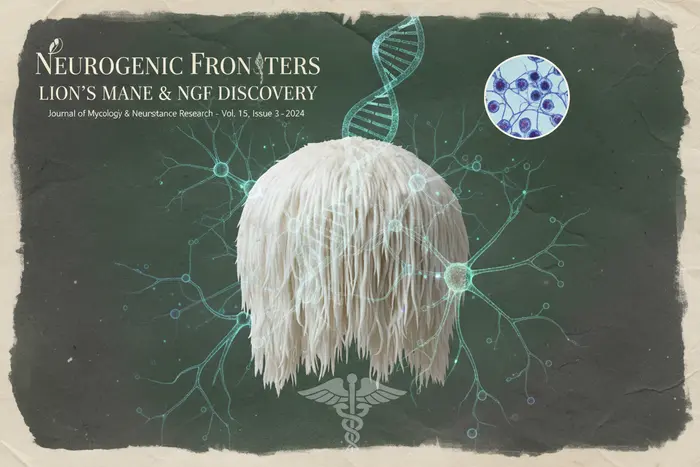
This guide covers everything you need to know about Lion's mane and ngf: what human research really shows, including key research findings and practical recommendations.
Lion's Mane is often linked to nerve growth factor, or NGF, and that phrase appears so often in product marketing that it can sound more settled than it really is. The connection is meaningful, but it needs context. To understand the mushroom responsibly, you need to separate what has been shown in cell and animal models from what human research can actually confirm right now.Why NGF Matters
NGF is involved in the growth, maintenance, and survival of certain neurons. That makes it a compelling concept for any mushroom associated with cognitive and nerve-support themes. It is also why Lion's Mane receives such strong attention in conversations about brain health. But a biologically interesting mechanism is not the same as a clinically proven outcome.What Preclinical Research Suggests
Laboratory and animal data support the idea that compounds in Lion's Mane may influence pathways related to nerve growth and repair. This is where much of the enthusiasm comes from. Preclinical results are valuable because they show plausibility, but they do not automatically tell us how large, reliable, or noticeable the same effects will be in humans using real-world products.What Human Research Actually Supports
Human studies are still relatively limited and often smaller than ideal. Some suggest benefits in cognitive function or subjective mental performance over time, but the evidence is not yet strong enough to justify exaggerated claims. A careful reader should treat NGF language as a promising mechanism that supports further interest, not as a finished proof statement.How To Read Product Claims
Good product evaluation starts with humility. If a label speaks as though NGF effects are guaranteed, it is overselling. Better brands present Lion's Mane as a promising functional mushroom with growing evidence, not as a certainty. That difference in language usually tells you a lot about the quality of the marketing.Bottom Line
The NGF story is one of the most interesting reasons to study Lion's Mane, but it should be read accurately. Preclinical evidence is strong enough to justify attention, while human evidence still calls for measured expectations and better-quality long-term research.What To Reasonably Expect From Lion's Mane Based on Current Evidence
Given the current state of research, the most reasonable expectation from regular Lion's Mane use is gradual support for cognitive function and nervous system resilience over weeks rather than an acute or dramatic change. The most commonly reported observations from consistent users include improved mental clarity over the course of a day, slightly better concentration during cognitively demanding work, and occasionally improved dream quality or recall, which some researchers connect to NGF activity during sleep. These observations are not guaranteed and will vary based on individual biology, product quality, dose, and lifestyle context. They are useful calibration points, not promises. The research trajectory for Lion's Mane is positive. More human trials are being conducted, and the growing body of evidence will likely clarify which applications are most reliable and which populations benefit most. Staying informed about the research while maintaining realistic expectations is the right posture for anyone currently using Lion's Mane and hoping to understand what it is actually doing for them.Related Lion's Mane products
1. Lion's Mane2. Lion's Mane Capsules
3. Lion's Mane Tincture
Frequently Asked Questions
What is Lion's mane?
Lion's mane is a functional mushroom or natural compound used in traditional and modern wellness practices for its range of health-supporting properties.How do you use Lion's mane?
Lion's mane is commonly available as extracts, tinctures, capsules, or dried preparations — the best form depends on your health goals and lifestyle.Is Lion's mane safe?
Lion's mane is generally considered safe for healthy adults at recommended doses, but always consult a qualified healthcare professional before starting any new supplement.Try Our Lion's mane Products
Visit amanita-store.com to browse our full range of lab-tested, wild-harvested products. Free shipping on orders over €50.
Related Articles
Sources
- Mori K, et al. Nerve growth factor-inducing activity of Hericium erinaceus. Biol Pharm Bull. 2008. PMID 18296328
- Lai PL, et al. Neurotrophic properties of the Lion's mane medicinal mushroom. Int J Med Mushrooms. 2013. PMID 24266378